
2026-06-29
How Real-Time Translation Changes the Payroll Game for Global Teams
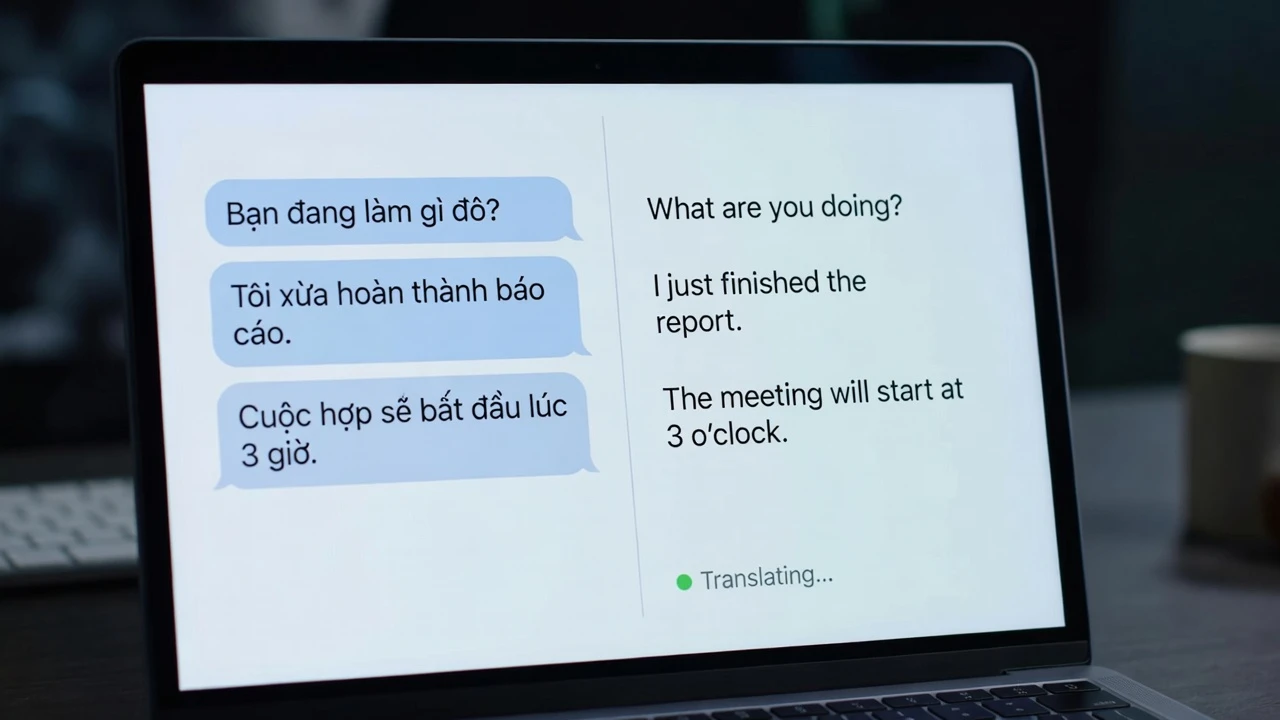
I've been thinking about a specific problem that most hiring platforms have completely backwards.
Platforms like Upwork solved the geography problem—you can hire someone from anywhere now. But they accidentally created a new constraint: you can only reliably hire people who already speak English well. That's a huge filter. It cuts out entire labor markets, keeps wages artificially high, and forces companies to pay premium rates just to avoid the friction of communication.
The real waste isn't in the hiring. It's in leaving talent on the table because of a language barrier that's increasingly solvable.
The Vietnam Opportunity Nobody's Really Chasing
Here's what's interesting about Vietnam specifically. Countries like India and the Philippines built their entire remote workforce brand on English proficiency. That's their competitive advantage, and it's real—if you want someone who can jump on a call and sound native-level comfortable, those markets deliver.
But that also means everyone's competing for the same pool, which drives wages up. And it completely ignores the enormous workforce in countries like Vietnam where professional-level English just isn't the norm, but the actual skill—whether that's marketing, design, operations—is absolutely there.
The constraint was communication. The solution used to be "hire someone who speaks English." The new solution is: don't require that constraint at all.

What AI Translation Actually Changes
I'm not talking about throwing Google Translate at Slack messages and hoping for the best. Context matters. A marketing professional in Ho Chi Minh City talking about campaign performance has industry vocabulary, casual phrasing, and cultural references that generic translation breaks on constantly.
What changed recently is that LLM-based translation with enough context can actually handle that. Real-time chat translation that understands you're talking about CAC and LTV, not just translating words. Messaging that preserves tone and intent, not just literal meaning.
That's the difference between "we tried hiring overseas and it was too confusing" and "we hired someone great and barely noticed the language difference."
Why This Works as a Service
Here's where it gets practical. Payroll is already a nightmare for distributed teams. Tax withholding, local compliance, payment methods, contractor versus employee status—it's the part of hiring that makes most founders just pick someone easier.
Bolt on translation and communication infrastructure, and suddenly you're solving two problems at once: the payroll friction and the communication friction. Neither one on their own is enough to switch platforms. Together, they're worth it.
You're not just paying someone in Vietnam at a lower cost. You're getting the same quality communication you'd have with a US-based hire, without the wage premium. The gap closes enough that it actually matters.
Starting Narrow, Expanding Later
The honest version is that I'm building this from a position of having some real-time advantage. I've spent the last year in Da Nang, I have a local network, and I understand the local market in a way someone building this from California doesn't.
So the first version is narrow: marketing professionals. People managing campaigns, doing content, handling community, running ads. Marketing is communication-heavy, context-rich work. If the translation layer works well enough that a Vietnam-based marketer can run a US campaign without friction, it proves the whole concept. Other disciplines follow from there.
The Real Shift
The deeper thing here isn't about cost arbitrage. It's about realizing that the constraint you've accepted as permanent—"I can only hire English speakers"—isn't actually permanent anymore. It was never about the capability. It was about the tooling.
Once the tooling catches up, you're not forced to choose between great talent and clear communication. You pick the better person, and the communication problem solves itself.
That's the kind of shift that seems small until you see what actually happens when you remove it.