
2025-11-08
Building a Colloquial English App for Korean Learners: Why Phrasal Verbs Matter More Than Vocabulary
You've probably spent years studying English. Hundreds of vocabulary words, grammar rules locked down, test scores that look impressive on paper. Then you watch an American TV show without subtitles, or join a video call with native speakers, and suddenly none of it clicks.
That gap isn't a gap in your English ability. It's a gap in what you've been taught.
The Real Problem with How We Learn English
Korean learners face a specific problem that most English curricula completely miss. We learn formal vocabulary and grammar rules, then get shocked when real English doesn't follow the textbook. A native speaker says "I'm beat," and your brain searches for the word "beat" in the dictionary. Someone asks "Can you loop me in?" and you understand each word individually but not what they actually mean.
The issue isn't missing words. It's missing the patterns that native speakers actually use every day.
Phrasal verbs, idioms, and conversational expressions aren't optional extras. They're the foundation of how English speakers actually talk to each other. You can know the word "meticulous" and still not understand "hang tight." You can score 990 on the TOEIC and freeze when someone says "Let's bounce."
This is why so many Korean learners hit a wall. We've been optimizing for the wrong thing.

What an App Actually Needs to Do
If an app is going to fix this, it can't just be another word list. It needs to make colloquial English feel natural, not like emergency flashcards you're cramming before a test.
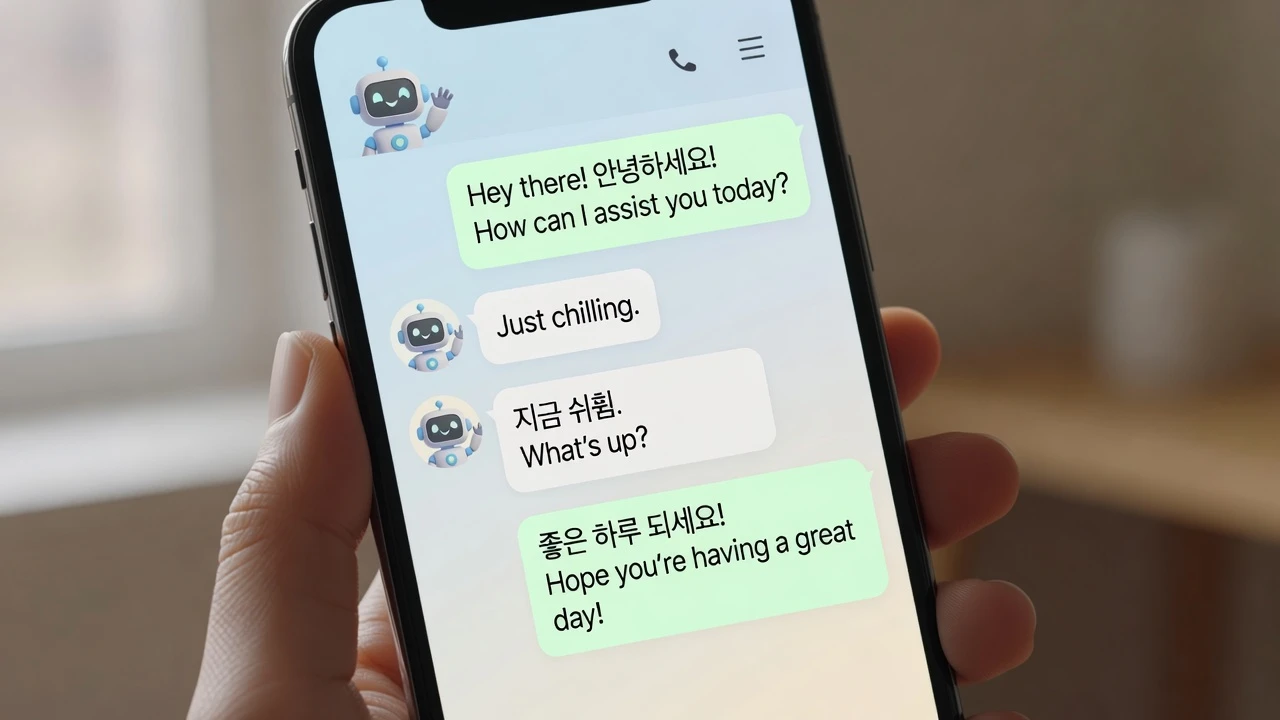
The core idea is straightforward: you learn through conversation with an AI friend. Not a lesson, not a quiz, not a grammar explanation that puts you to sleep. A real conversation where you're trying to understand what someone is actually saying, where you care about keeping up with them, where the context matters.
That friend needs to remember what you've talked about. They need to know your interests. And critically, they need to challenge you with just the right difficulty level—not repeating words you already know, not jumping to expressions that are too advanced for where you are right now.
How It Actually Works
When you start a conversation session, the app picks 3 to 6 phrasal verbs or idioms as a target. These aren't random. They're chosen based on your learning history, your current level, and expressions you've struggled with before.
The AI friend brings up something from your interests. Maybe you follow Messi and there's a new goal highlight from yesterday. Or you mentioned you're learning salsa and there's a video going around about a technique you wanted to understand. The conversation starts naturally, in English, and the target expressions weave through it—not forced, but actually how someone would talk about that topic.
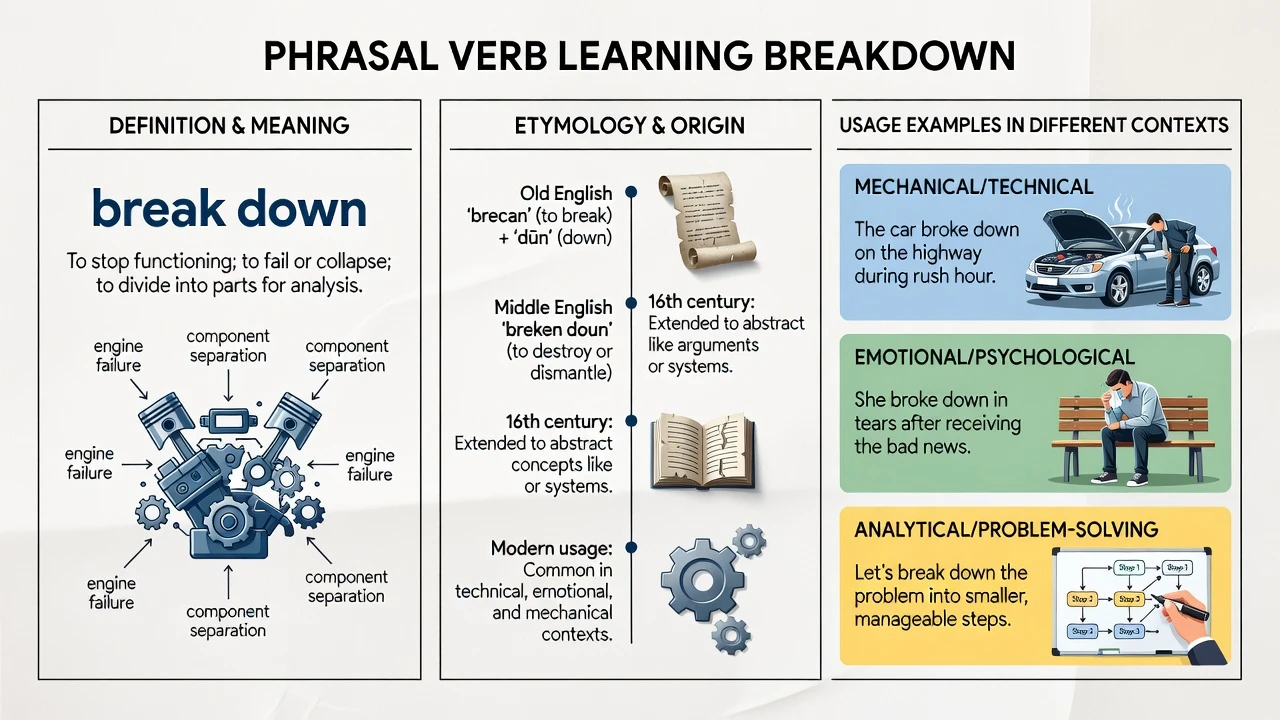
You respond however you want: typing, voice, whatever feels natural. The AI understands what you meant, keeps the conversation moving, and gently surfaces the expressions you're supposed to be learning. If you don't catch something, the app drops into learning mode for just that phrase. You get the definition, a quick note on where it comes from, maybe an example from a completely different context so you see how flexible it is. Then you're back in the conversation.
The session runs about 10 to 15 minutes. Short enough to feel manageable, long enough to repeat the target expressions multiple times in different ways so they actually stick.
Why This Actually Sticks
Most language apps treat vocabulary like a problem to solve once and move on. But that's not how your brain works. You forget things. That's normal. The app needs to expect it.
So older expressions you've learned before show up again—especially the ones you struggled with. Not every time, but strategically. If you hit the learning mode for "loop me in" three times in two weeks, it starts appearing in future conversations more often, because the app knows you need the repetition.
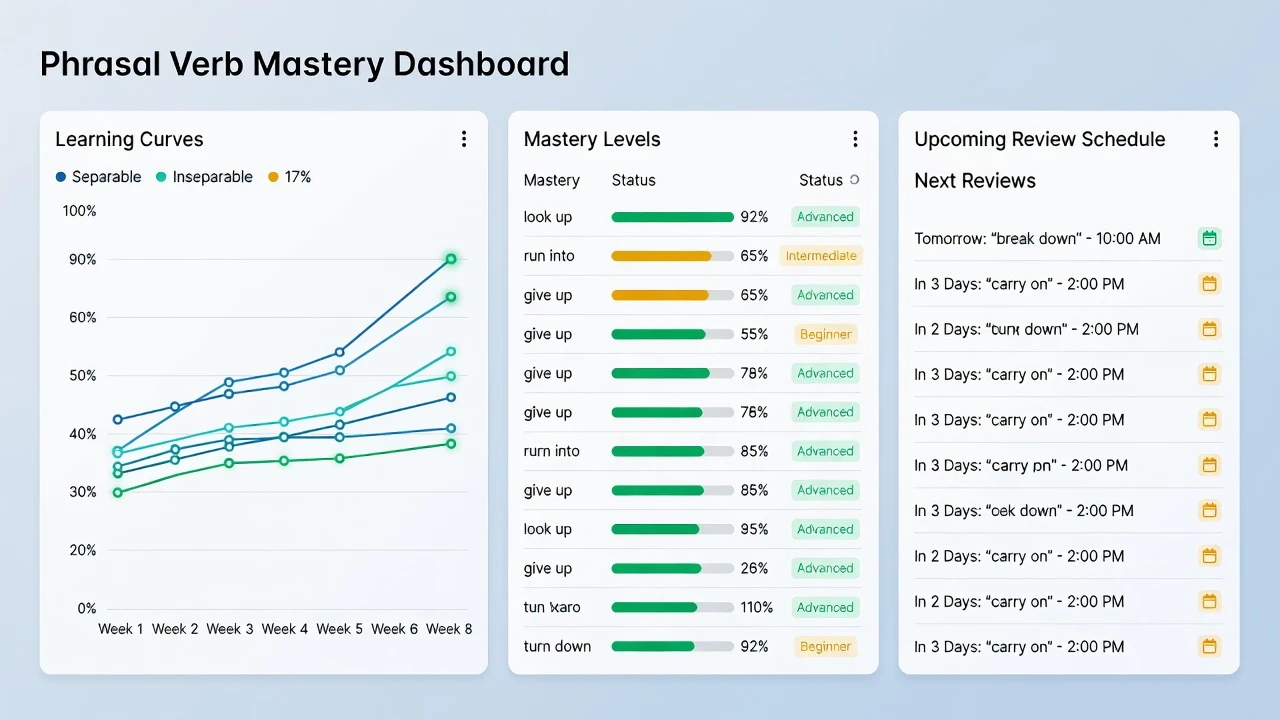
Your progress isn't hidden either. Each phrase has a learning ratio that tracks how well you know it. As you use it more in conversations, your confidence score goes up. It's not a game mechanic for its own sake. It's actually reflecting something real: expressions you use a lot become natural. Expressions you only studied once need more time.
The app also learns what's hard for you specifically. If you're consistently slow to catch certain patterns, or you keep asking for the learning mode, it adjusts. Maybe those expressions need to show up more. Maybe you're not ready for the harder ones yet. The difficulty moves with you, not against you.
The Friend Matters
This isn't just because conversation is better than memorization, though it is. It's because you're more likely to actually open the app if there's someone you want to talk to.
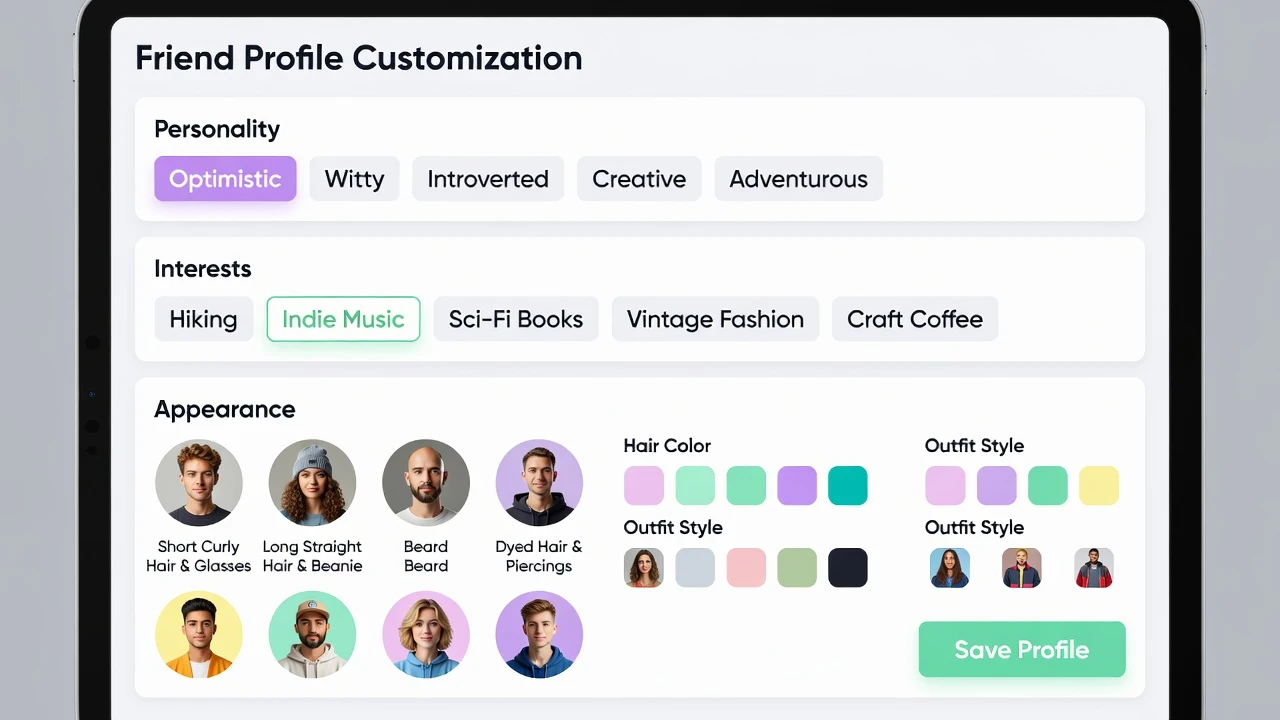
You can configure your AI friend however you want: age, personality, what they're interested in. And as you keep talking, other friends can appear. Now there's a conversation happening between multiple people, and you're trying to keep up. It feels less like studying and more like overhearing a group chat.
The app stays aware of your actual interests too. You set your things: Messi, FIFA, pickleball, salsa, trips to Da Nang, whatever. The AI agent is quietly pulling real news about those topics every day, summarizing them, storing them. When a conversation session starts, there's actual recent context to talk about. It's not "imagine you're at a coffee shop." It's "Did you see Messi's goal yesterday? That free kick was insane."
That specificity is what makes the repetition feel natural instead of exhausting.
The Spaced Repetition Layer You Don't See
Underneath the conversation is a structured vocabulary database. Every colloquial expression has metadata: its difficulty level, how often native speakers actually use it, whether it's formal or very casual, what other expressions are similar. When you finish a learning session, all of that flows into your personal learning memory.
The app tracks not just whether you know something, but how well you know it and how often you use it. An expression you learned three weeks ago and have been using regularly in conversations has a high score. An expression that was marked as learned but never appears naturally gets flagged. The system brings it back.
Your overall level matters too. If you're intermediate, the app assumes you already know basic expressions. It doesn't waste time on "What's up?"—it moves straight to something that's actually challenging for where you are. That's the hardest part to get right, and it's why the vocabulary database and learning history need to stay in sync.
Why You'll Actually Stick With It
Ten to fifteen minutes is achievable. Most people can find that in a day. The conversation feels like talking to a friend, not working through a lesson. Your interests are actually represented in what you're learning. And there's immediate social reinforcement—the friend reacts to what you say, remembers what you've told them, checks in on things you cared about.
Gamification helps too, but it's not the center. You're not chasing badges. You're watching your score go up because you're actually using these expressions more naturally. You're seeing your friend appreciate that you understood a joke faster than you used to. That's the real feedback loop.
The app needs to be intuitive enough that you never think about how to use it. You open it, your friend is there, a conversation starts. You're done overthinking and you're back to just understanding English the way native speakers actually speak it.
That's the shift. From studying English to living in it, one conversation at a time.