
2026-06-29
From Idea to Deployed: Building a Rapid Development Platform for Custom Software
When I talk to entrepreneurs and small teams about their software needs, I hear the same frustration over and over. They have a clear vision for what they want to build, but the path from concept to a live product feels impossibly long and expensive. They either spend months iterating with a developer, or they try to force their idea into an off-the-shelf template that never quite fits right.
That gap between "I have an idea" and "it's live on the internet" is exactly what I've been thinking about. What if we could compress that timeline dramatically—not by cutting corners, but by being smarter about how we build?
The Problem With How Software Gets Made Today
Most custom development follows a familiar pattern. You spend weeks in discovery meetings. Then you wait for estimates. Then development starts, and halfway through, something fundamental changes about what you actually need. By the time your product ships, you've spent months and tens of thousands of dollars, and half the time it still isn't quite what you imagined.
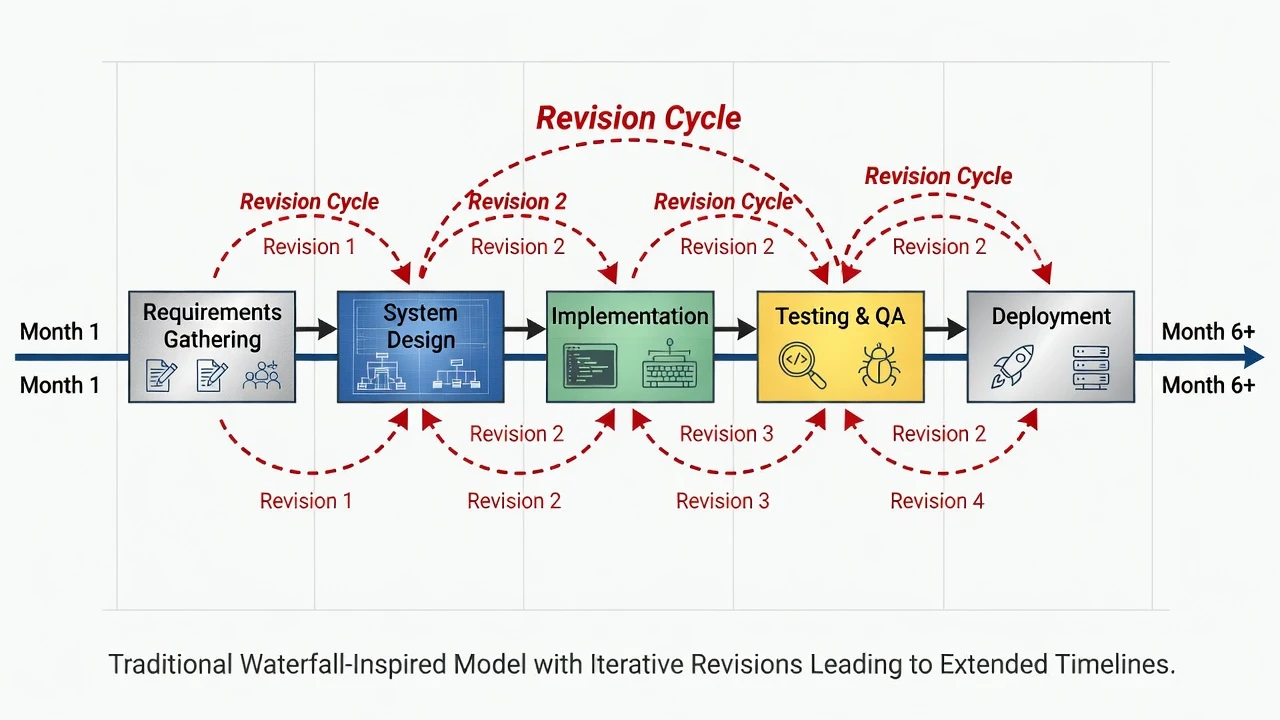
The real issue isn't that custom development is slow. It's that the feedback loop is broken. You can't see what you're building until it's mostly built. You can't touch it, click it, or test your assumptions until the developer hands it over.
There's also a hard truth: not every project actually needs six months of engineering. A lot of what businesses want to build—internal tools, customer portals, marketplace features—follows predictable patterns. We've solved these problems dozens of times before. We're just solving them from scratch for each new client.
A Different Approach: Requirements First, Deploy in Six Hours
I've been building a platform that inverts how this usually works. The idea is simple on the surface: compress the entire cycle from concept to live product into a predictable, guaranteed timeline.
Here's how it actually works:
Phase One: AI-Powered Requirements Discovery
This is where everything changes. Instead of sitting through endless meetings, a client starts a conversation with an AI system trained specifically on technical discovery. The AI asks the right questions in the right order—the kind of questions a senior architect would ask if they had unlimited time.
The AI isn't just taking notes. It's building a requirements document in real time. It's asking for reference images. It's pushing back on vague ideas and forcing specificity. It understands that "a booking system" could mean twenty different things, and it narrows it down.
This discovery phase culminates in a clickable prototype. Not a wireframe. A real, interactive prototype you can actually use. The client can see the flow, test the assumptions, and approve the direction before a single line of production code gets written.
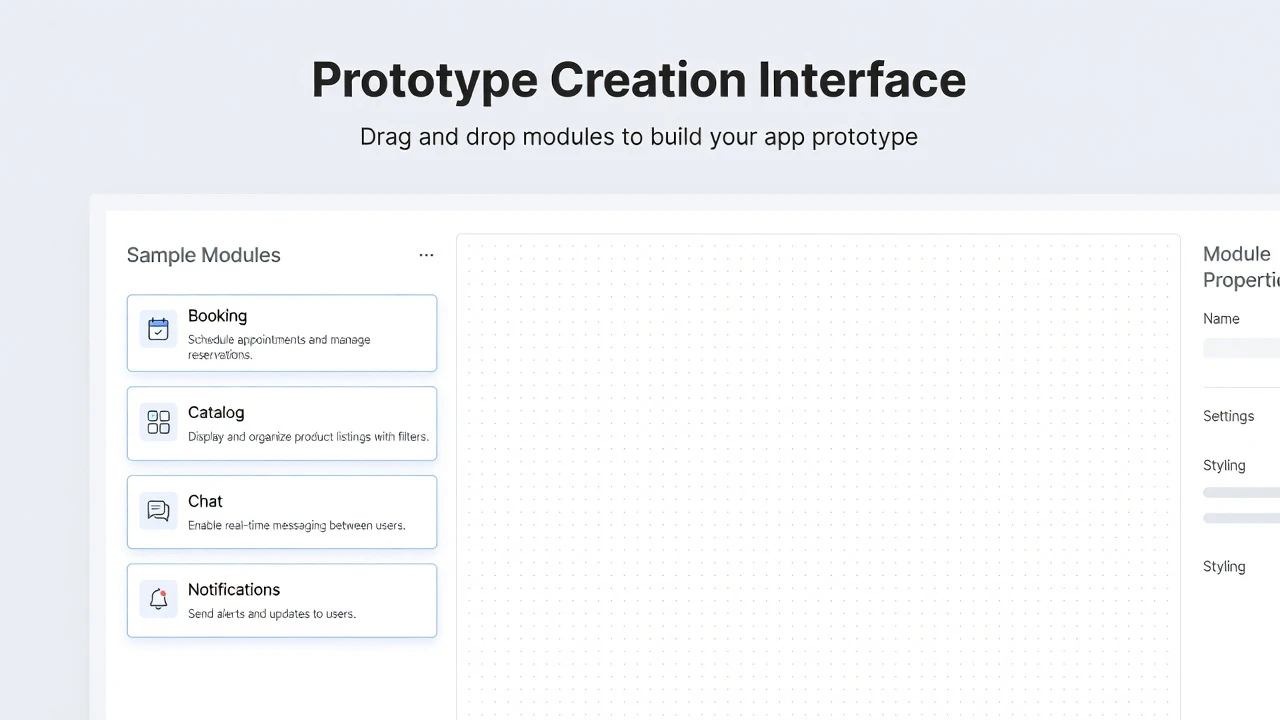
The discovery phase has a cost—I charge a flat fee of about fifty dollars—but it comes with strict guardrails. The AI has a token budget. You can't infinitely refine. At some point, you have what you need, you approve it, and you move forward.
Phase Two: Guaranteed Six-Hour Deploy
Once requirements are locked in, a human developer takes over. Not to start from scratch, but to assemble from proven pieces.
The system works with modular components. Booking system. Catalog. Chat. Notifications. Analytics. The client picks up to five modules that match their needs. Within those constraints, the developer builds, integrates, and deploys everything in six hours.
This isn't magic. It works because:
- We're not inventing anything new. These modules already exist.
- We're not configuring anything manually. Domain setup, database migration, Git integration, server deployment—all automated.
- We're not guessing about requirements. They're locked in from the prototype phase.
- We're not optimizing for perfection. We're optimizing for "works live today."
The developer gets the requirements, pulls the relevant module code, wires everything together, and pushes it live. By the time six hours is up, there's a real product accessible at a real domain. There's an admin panel. There's a database. There's a Git repository tracking every change.
If it's a mobile app, it goes straight to TestFlight. If it's a web app, it's live on the URL. If it's a desktop application, it's packaged and ready.
Why This Actually Works
The traditional argument against "rapid development" is that you're sacrificing quality. That's only true if you're trying to be rapid about the wrong things.
I'm not trying to be rapid about discovery. I'm not trying to be rapid about requirements. I'm not trying to be rapid about making architectural decisions. Those things need time and thought.
What I'm being rapid about is execution on known patterns. If you know exactly what you want to build, and it fits into an existing module ecosystem, the actual coding step is where we've already removed all the friction. No setup. No configuration. No decisions. Just assembly.
The other thing that makes this work is honesty about scope. Not every project qualifies. If you need a completely novel integration, or if your requirements are so custom that they don't map to any existing module, this approach isn't for you. But most projects—probably more than you'd expect—do fit into that pattern.
Where It Actually Lives
The product itself is a web platform. You start by describing what you want to build. The AI discovery system runs you through a structured conversation. You approve a prototype. You pay the discovery fee. Then a developer slots you into their calendar.
Six hours later, you have a live product. Full deployment pipeline. Real database. Integrated with your domain. Git history ready for future changes.
What Gets Left Out (On Purpose)
This system is built for speed, which means some things are deliberately out of scope:
- Multi-tenant SaaS complexity
- Advanced role-based permissions
- Custom backend logic that doesn't fit the modules
- Complex third-party integrations
- Long-term ongoing maintenance and scaling
Those are problems you solve after you launch and know what actually matters. What you get is a functioning product today. From there, you can iterate, refine, and customize for the real world instead of for imagined scenarios.
The honest test is whether someone would actually use this instead of hiring a traditional developer or building it themselves. If the promise of "I'll have a working product in six hours" is worth more than the money you save by DIY, then it works. If having a human review your requirements and personally build your system matters more than the speed, then traditional development wins.
I think for a lot of people, though, there's a third option they've never had: something faster than the long custom development cycle, but more thoughtful than throwing your idea at a no-code platform and hoping it fits.